Makutano City 1947
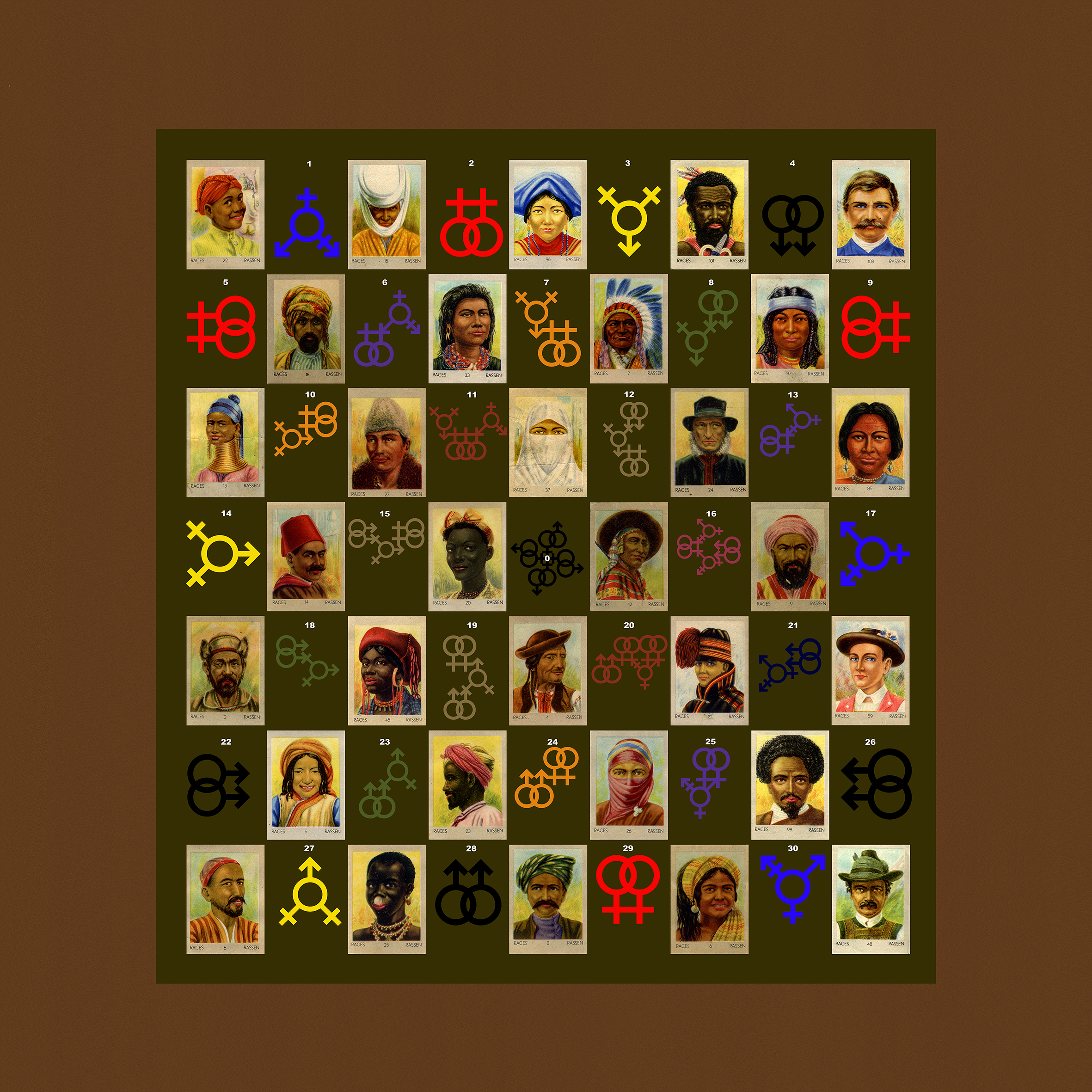
Makutano City 1947: Silence Diversity — "Makutano" is a Swahili name meaning "to meet". Between 1940 and 1960, many African elites spoke out in favour of independence for their countries. There was a huge migration of immigrants to Europe. These people were from different social classes, and their migration depended on the ties, relationships, and interests they had with the colonising country.
There were immigrants who received a nationality by criterion following a reform of a political system, those who went through missionaries, those called "évolués" and those who had scholarships. In the same year, 1947, on the Asian continent, the Indian Partition came about with the creation of India and Pakistan, and Indian immigrants moved following the existence of the colonial workers' program, also regulated by quotas according to trade and education.
On the American side, specifically in the United States, the Bracero program for temporary immigration for people working in agriculture, but also for the privileged, as a result of the nationality system that mainly concerned people from Western Europe.
I was more interested in people not favoured by immigration, who are more numerous than those favoured by immigration, and who suffer in their host countries from cultural attitudes, various forms of discrimination, and social isolation. And I was inspired by a Chromos Album published in 1947 by the Belgian Chocolaterie "Superchocolat Jacques spéciale" called "The human Races compete". This Album contains 144 categories of the human race. The 144 races were represented in portrait format, 6 cm × 4 cm, one next to the other, with a description of the person's affiliation in the portrait.
Based on the problems encountered by the underprivileged in their host countries, I decided to produce a work called "Makutano city 1947 Silence Diversity". Makutano is a Swahili name meaning "to meet", and in the host countries at the time it was more a question of diversity out loud.
To create Makutano City in 1947, I selected 32 portraits of different genders from the Chromos Album "Human race complete" published by Superchocolat Jacques Belge to create a world of integration without questioning or discrimination, where nobody cares about the lives of others.
The 32 portraits are linked with the sexual orientation of the human race. We come from the heterosexual human race; its development on other sexual orientations is subject to great protection and punishable by the value that people in today's era can express so high in case of discrimination. This has always provided a percentage on a planetary scale of the form of freedom to live in the eyes of the world.
This vision of freedom enabled me to create an atmosphere of life in Makutano city in 1947, where everyone is a migrant and cannot know exactly what their neighbour's gender or sexual orientation is. With a collage diptych that constitutes a part of the inhabitants of Makutano City 1947 in the form of a chess game made up of these 32 portraits, squares numbered from 0 to 30, and five gender signs (Heterosexual, Bisexual, Gay, Lesbian, and Transexual) that play the role of tokens that serve to complete the ranger by ranger from top to bottom, from bottom to top, from right to left, and from left to right. All the way to the center, which is point 0, represents heterosexual gender.
The boxes are completed by adding up the numbers assigned, combining the graphic forms of the gender signs, and mixing the basic colours that characterise the gender signs I have imagined. The results of the sum are found between the portraits and do not necessarily give an exact result of the numbers we know from the normal calculation, but a confused number, a new gender graphic, a new colour, and a new name for this new gender sign to create. The results become a new identity that can be personally assigned to each portrait in the square.
Diptych
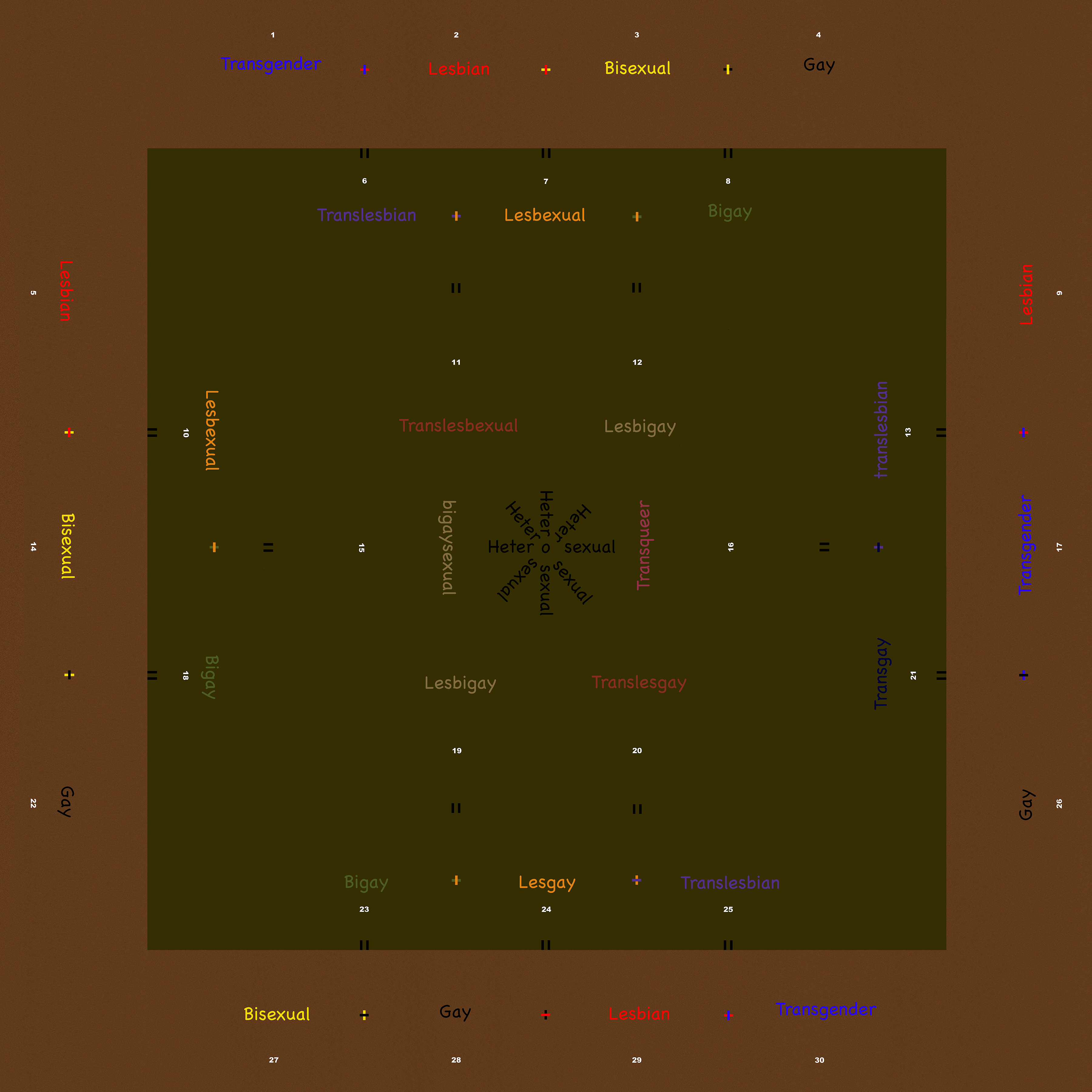
"Makutano" means "meeting" or "crossroads" in Swahili. The project creates a world of integration without questioning or discrimination, where everyone is a migrant and cannot know exactly what their neighbour's gender or sexual orientation is. The chess game structure of 32 portraits and five gender signs generates new identities, new colours, and new names for each portrait.
Source: Chromos Album "The human Races compete" published in 1947 by Superchocolat Jacques spéciale, Belgium.