Kadogos
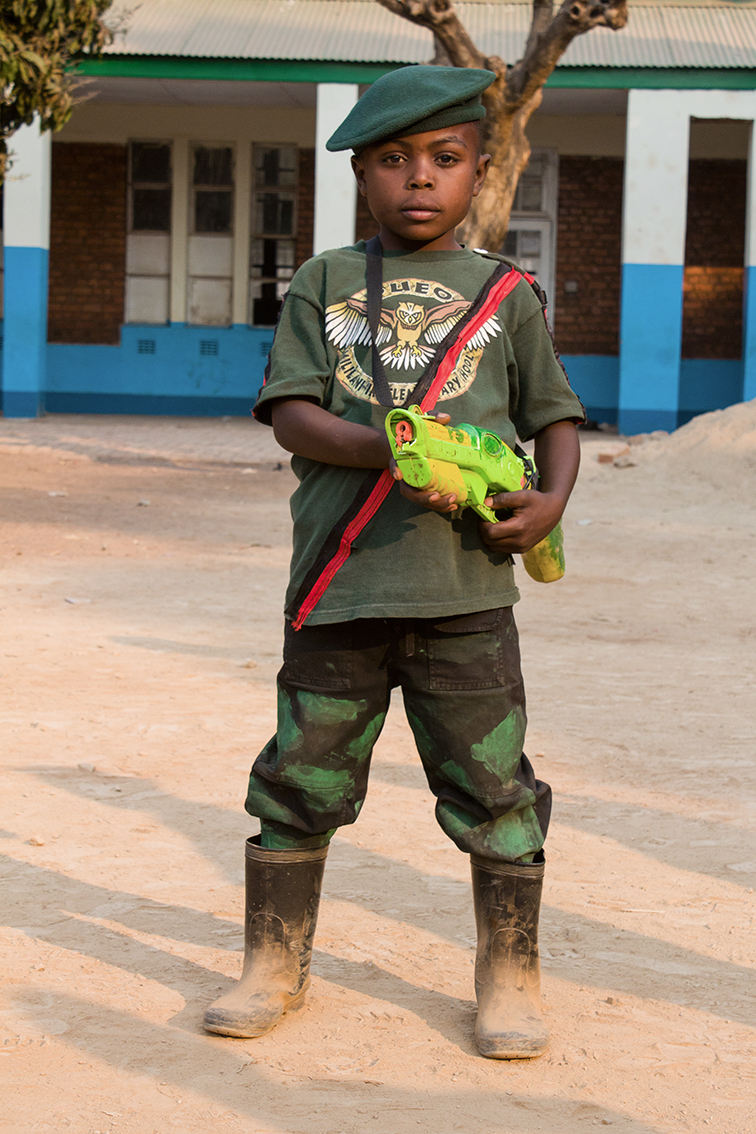
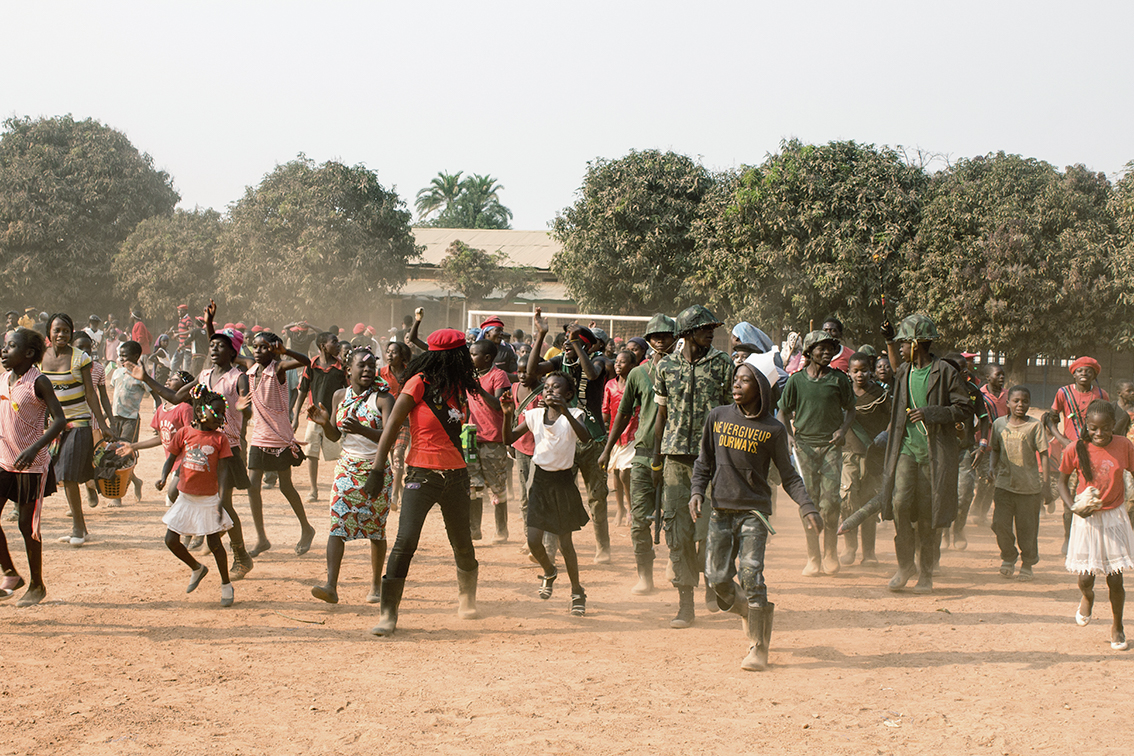
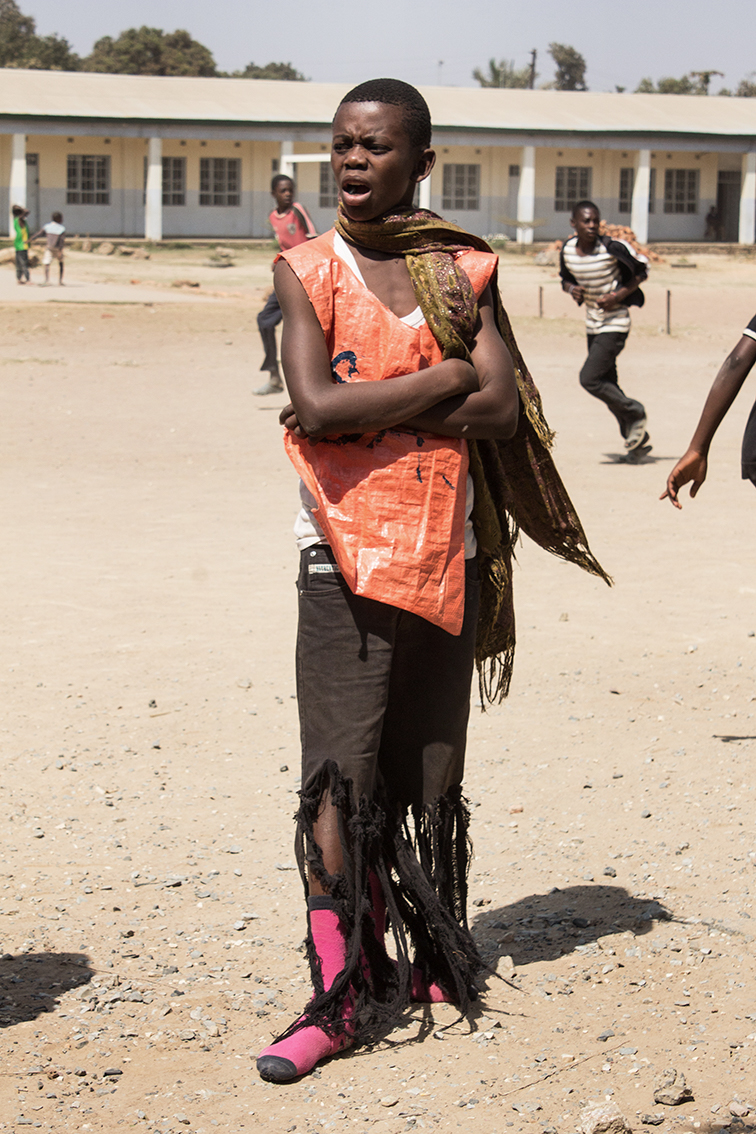
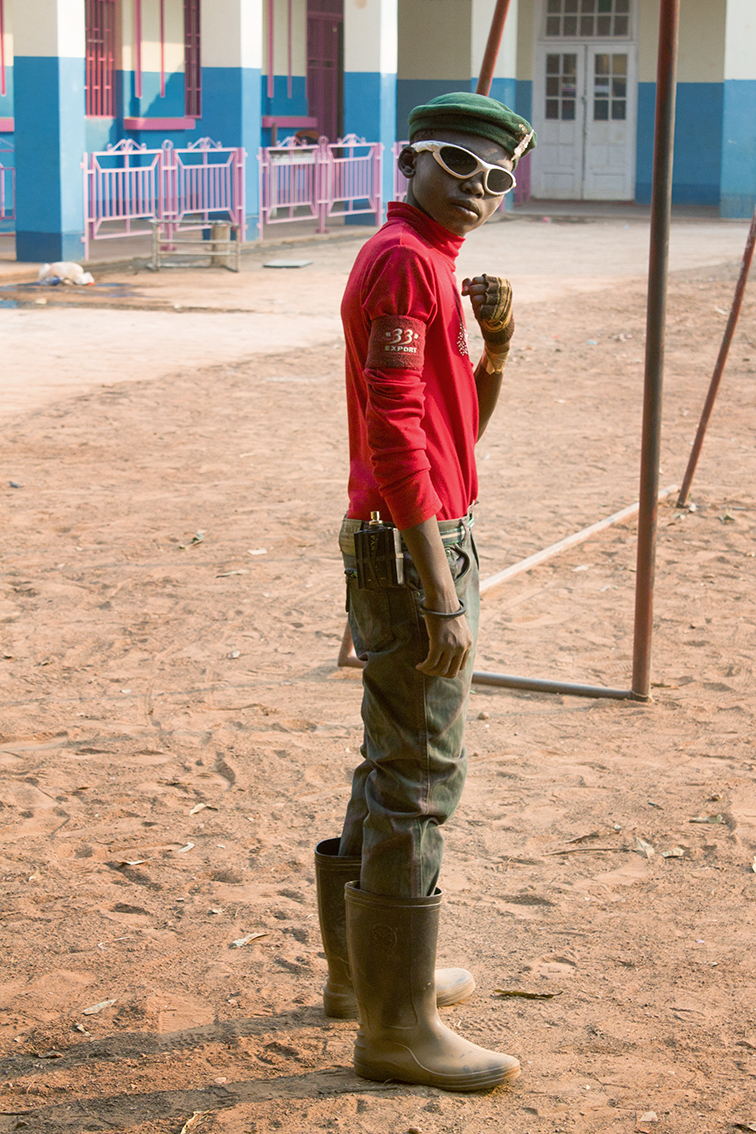
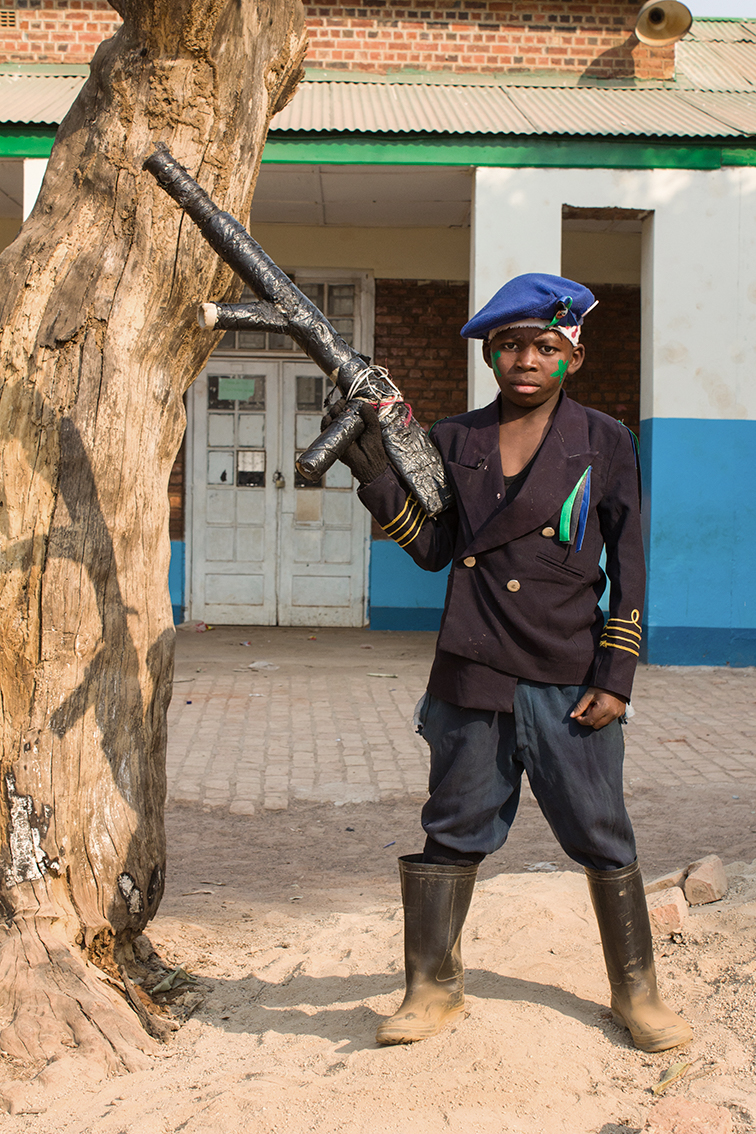
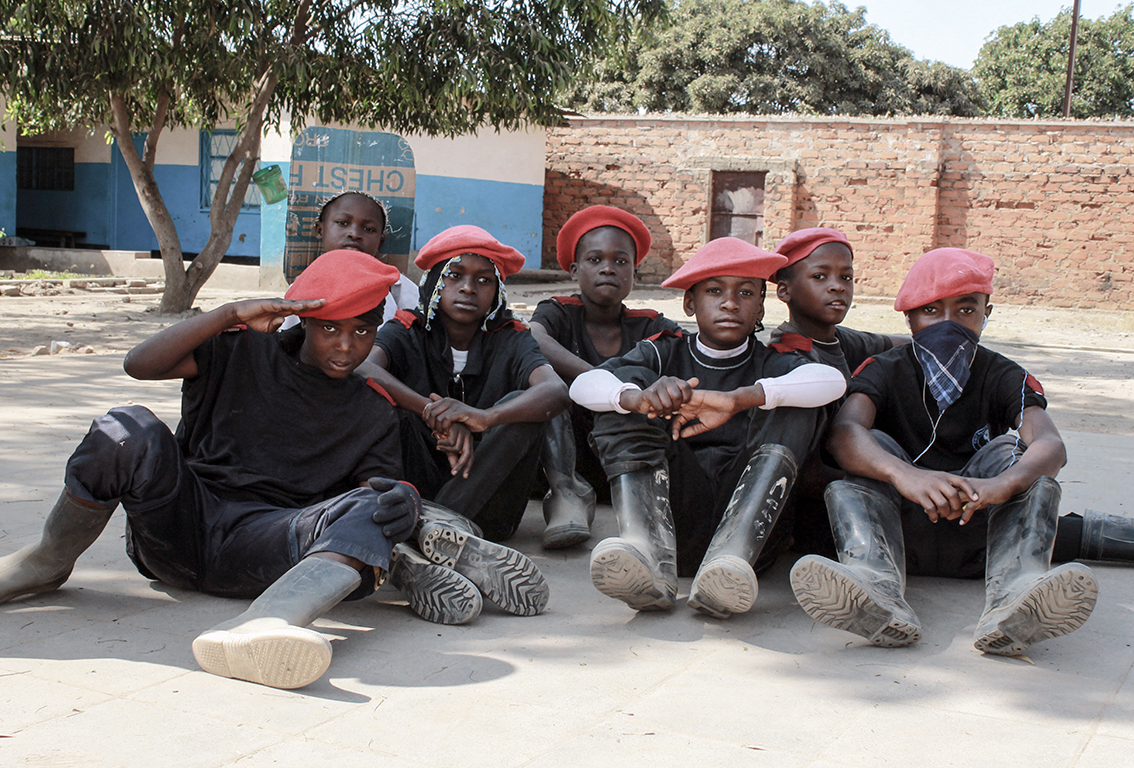
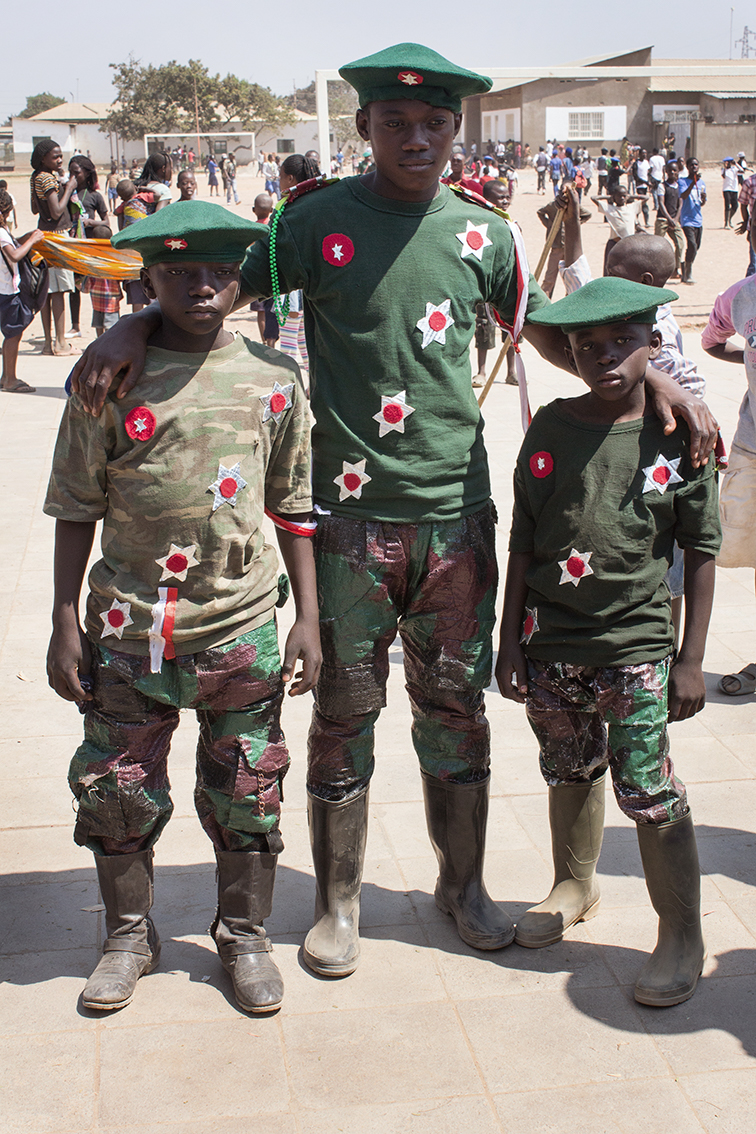
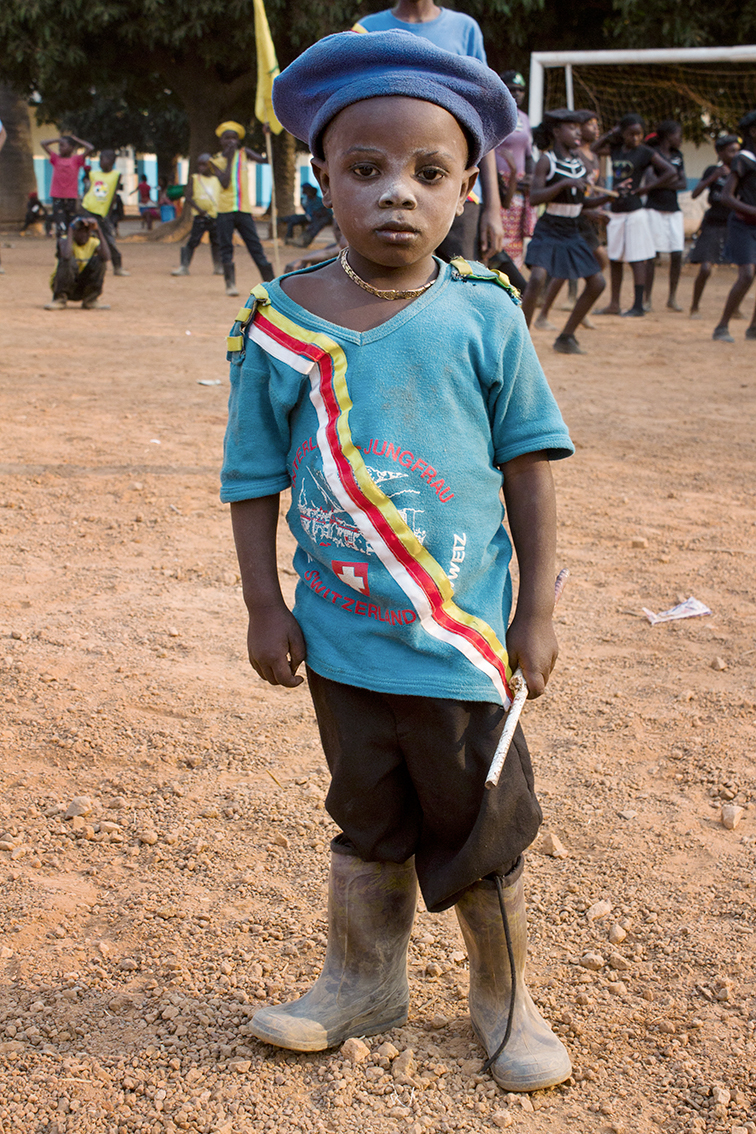
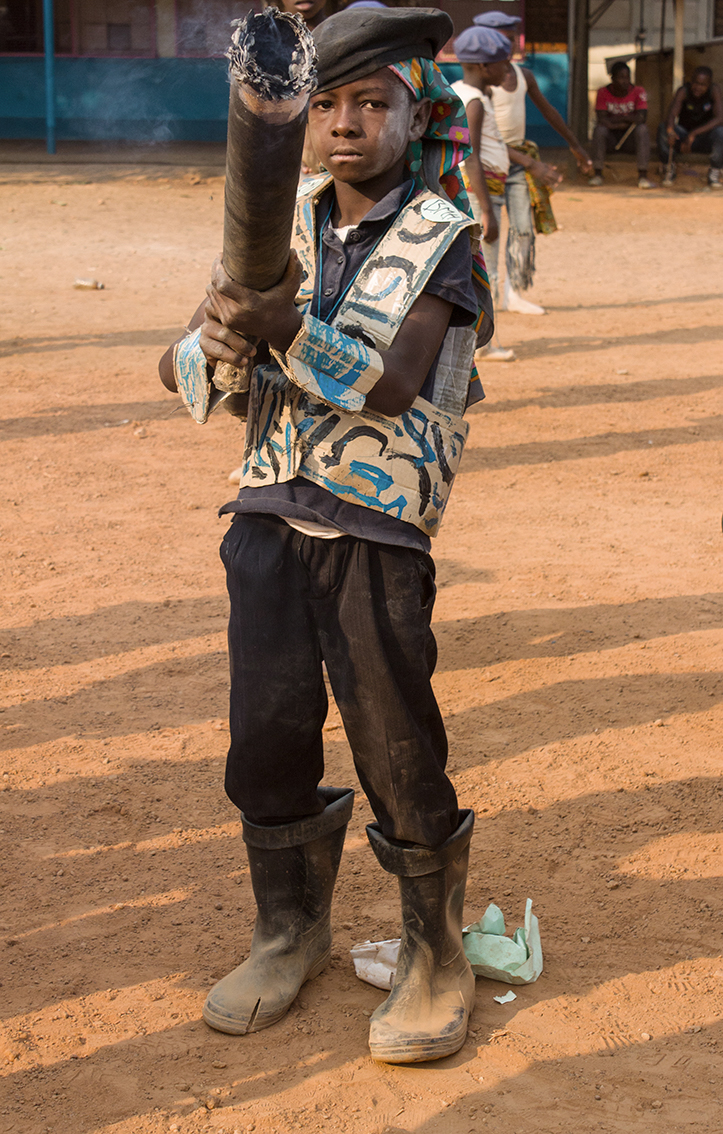
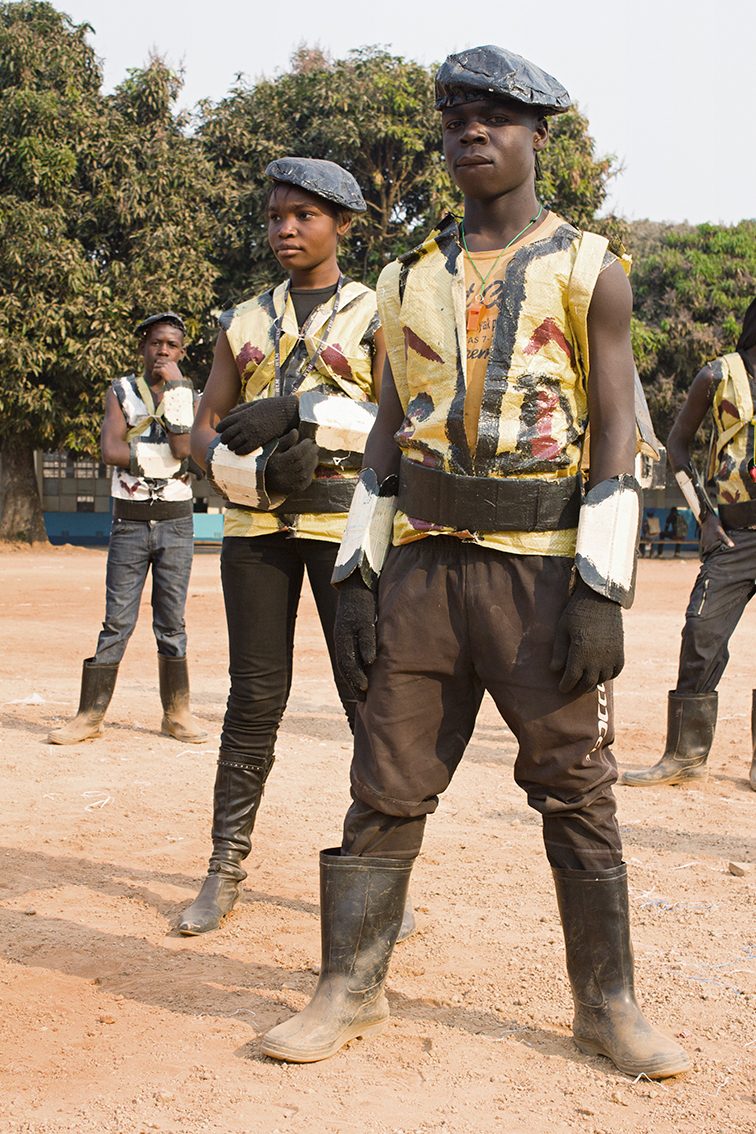
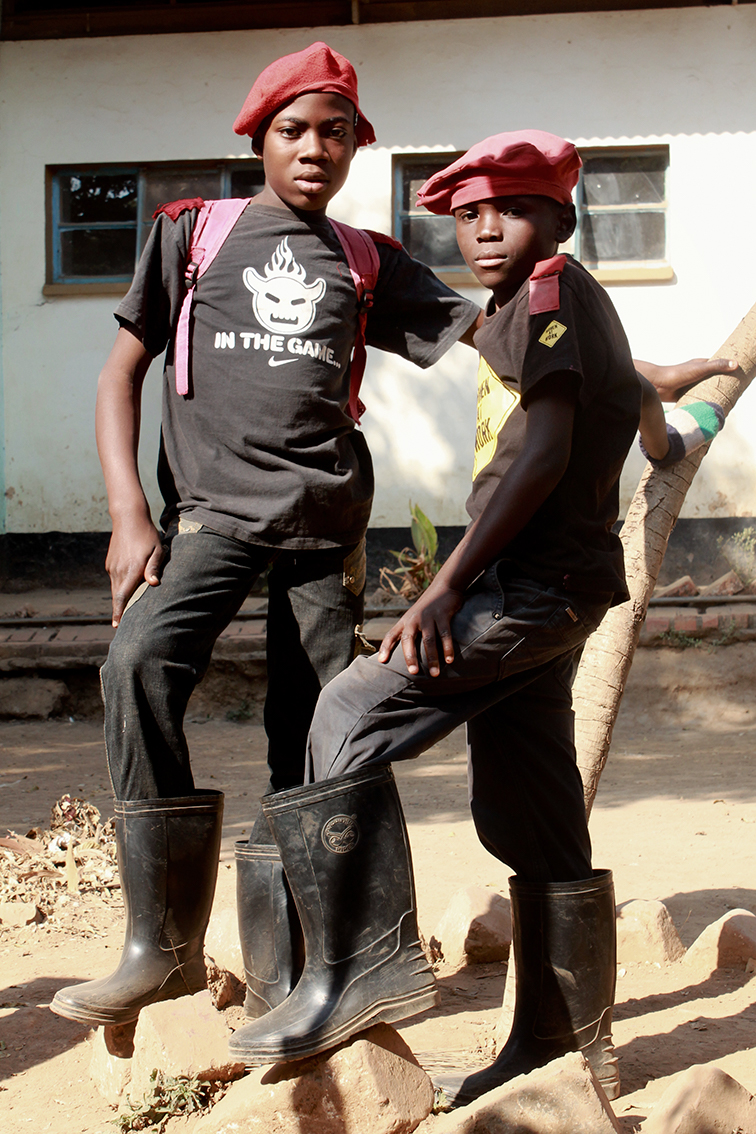
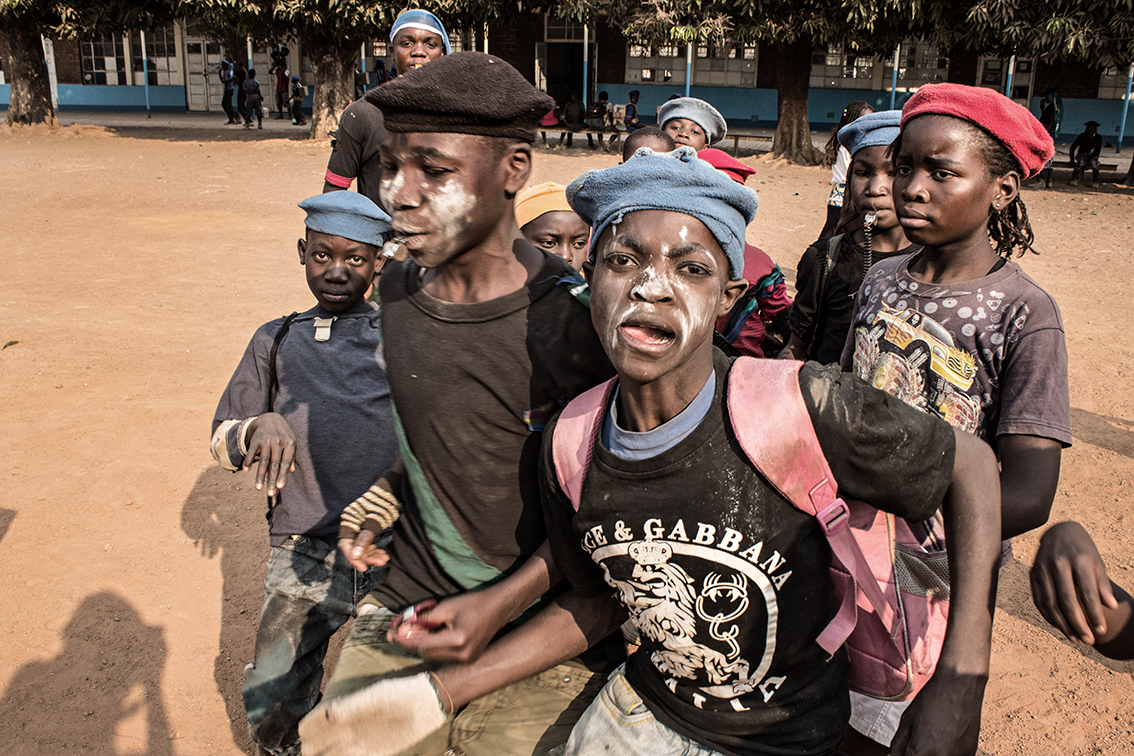
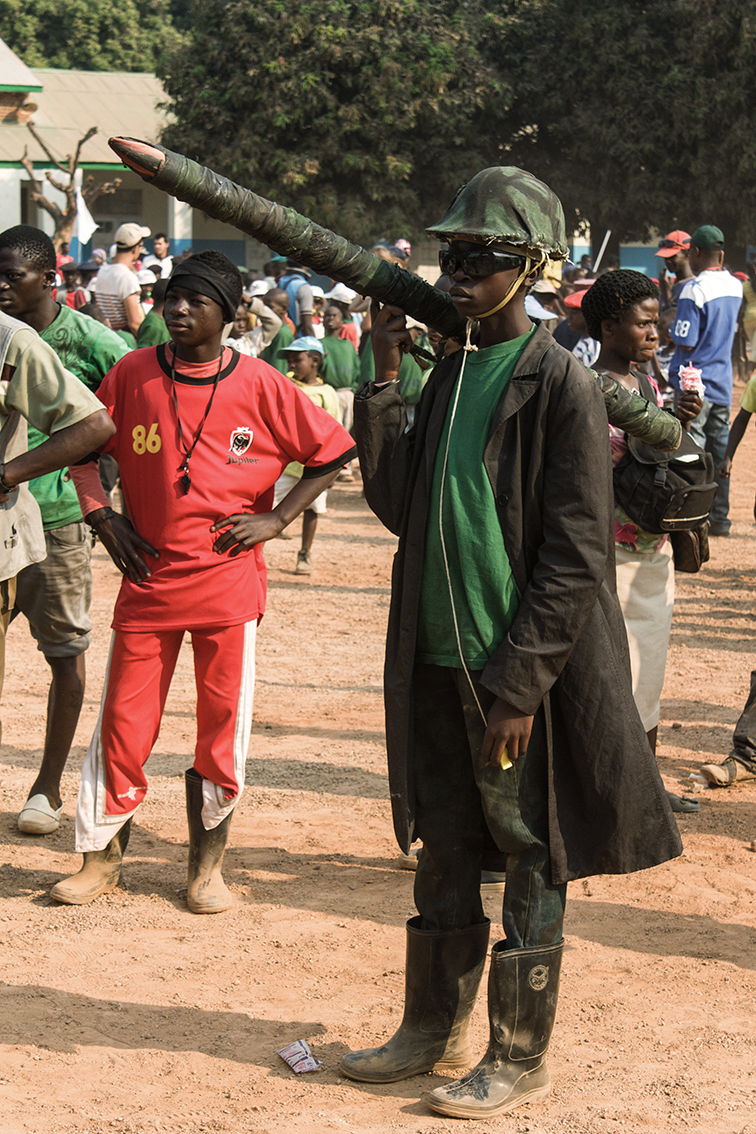
Kadogos (2012) developed the way official authorities dealt with the phenomenon of child soldiers. In recent years, the Congolese government banned military-oriented games for children. The "Game of the Plains" is an organized war game involving children between the ages of 6 and 18, which takes place every year during school vacations.
This ban highlights the link between children's desire to "play war" and the recruitment of child soldiers in various armed conflicts in the Democratic Republic of Congo. This desire was largely provoked and maintained by the games. On the other hand, violence perpetrated by various armed groups, whose virulence is based on the malleability of these children, continues to create headlines. Many trials are underway in the International Criminal Court.
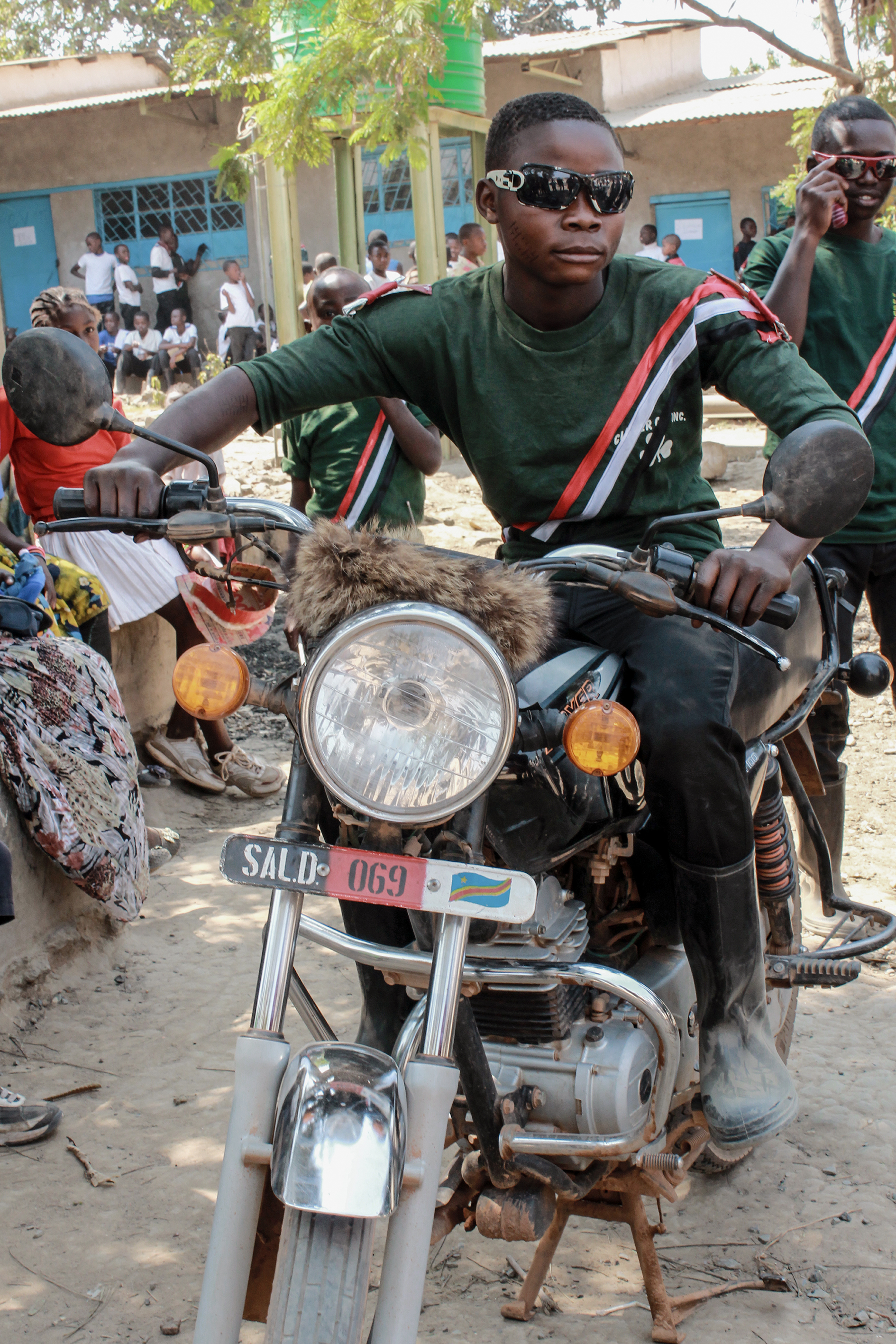
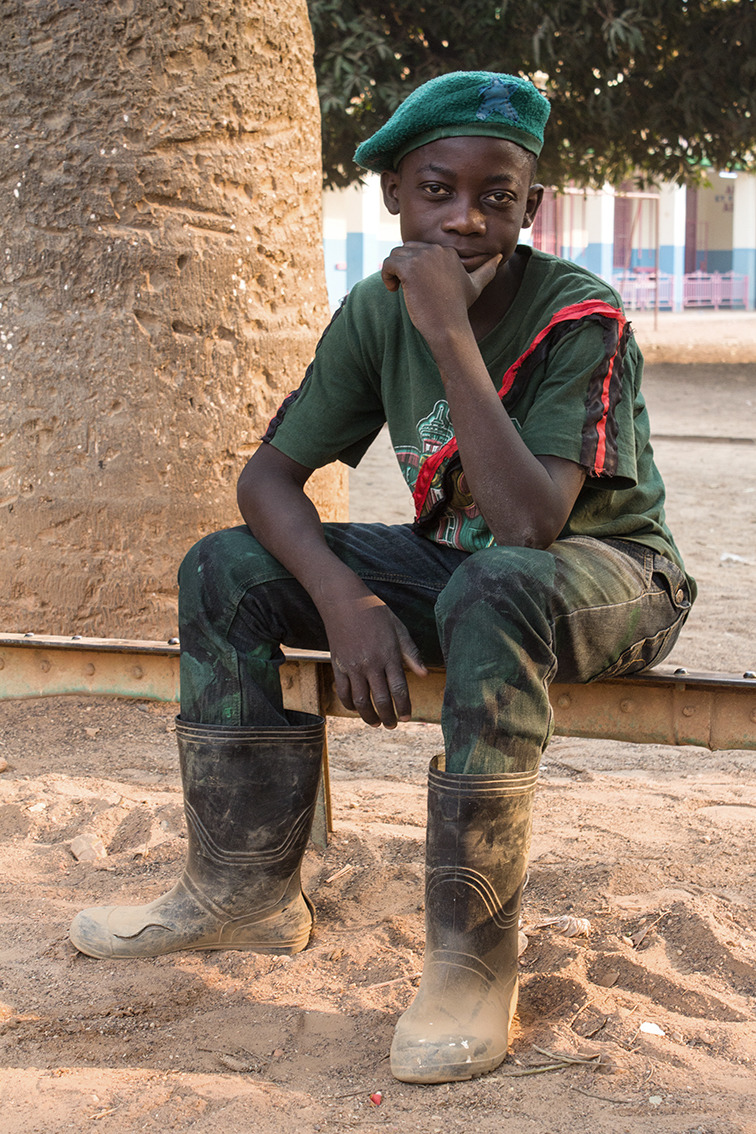
The main purpose of the Plains Game is to keep young people busy and to distract them from other social activities. Young people organise themselves to represent their social realities. Children who live near military camps are particularly influenced by the morning meetings that real military people call "Parade". This influence has spread throughout the city with the arrival of the AFDL and the "kadogo" child soldiers. Under this influence, they like to dress as soldiers and confront each other. This confrontation is not violated, but it is in clothing, dance, and choreography that one sees a difference.
Around 1997, I saw real child soldiers in the city of Lubumbashi, and a few years later, I still see children playing war games to receive bonuses after their vacations. There are indeed real child soldiers in the Democratic Republic of Congo, but the game allows children to wage war for a second time. I decided to portray these children who wanted to take on an identity based on their influence in the atmosphere of the game.
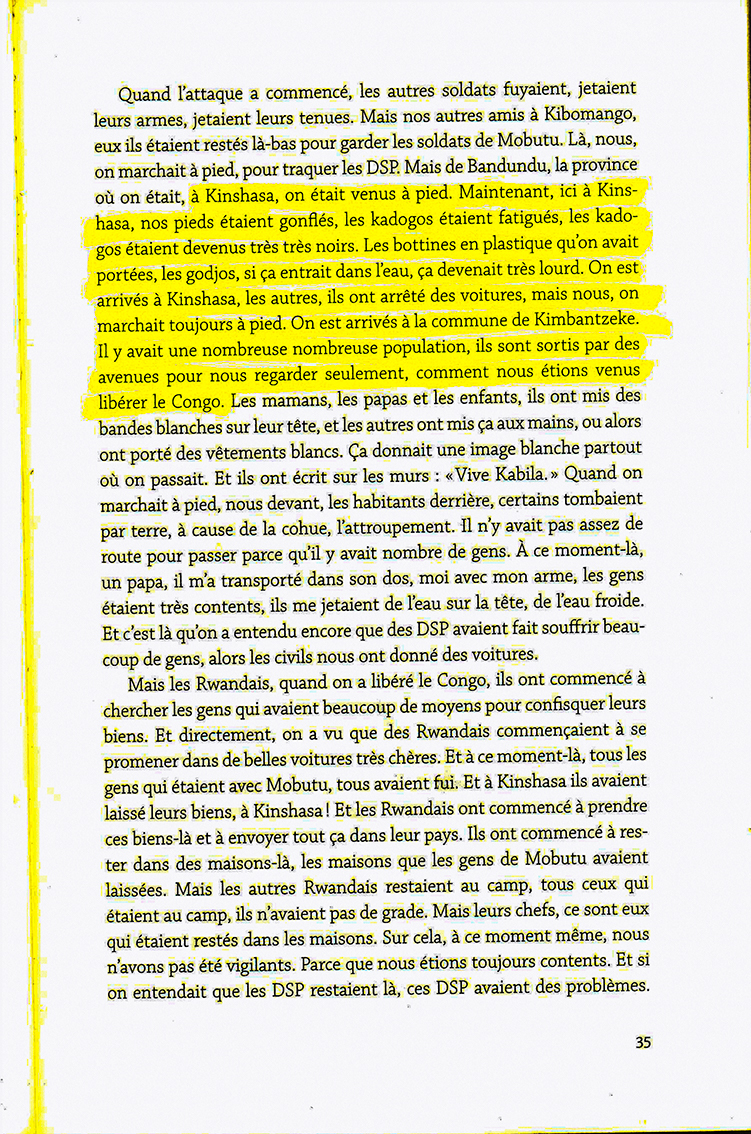
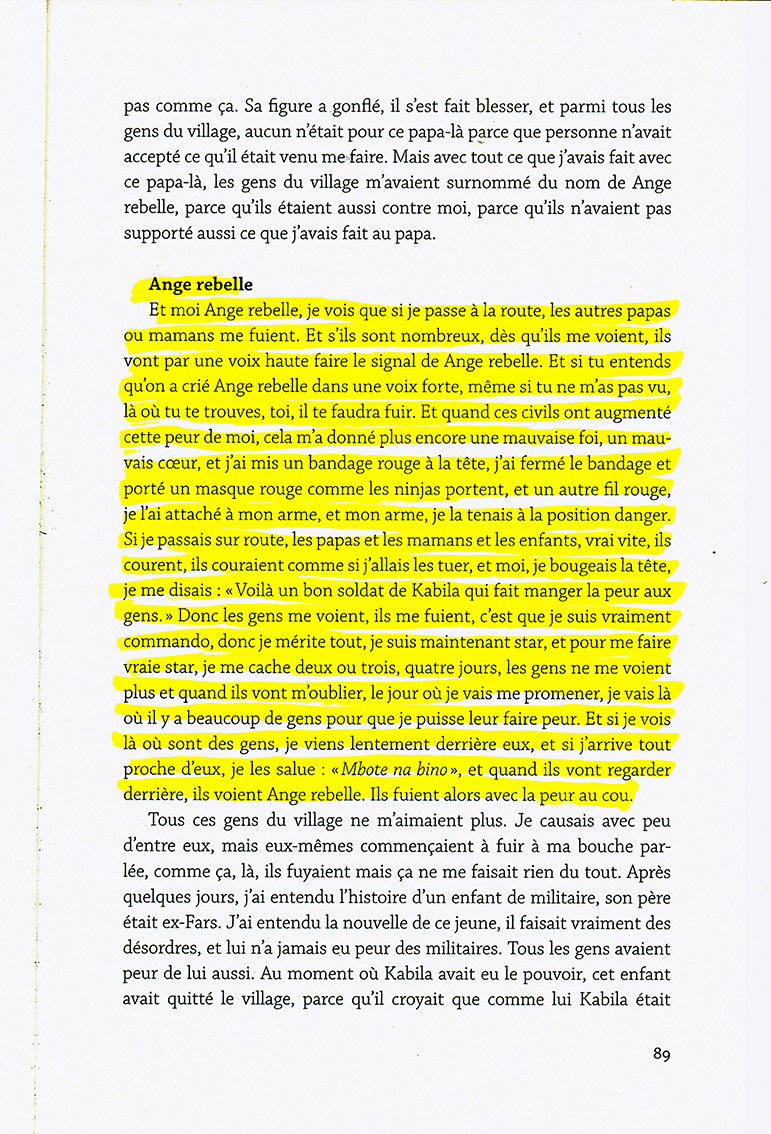
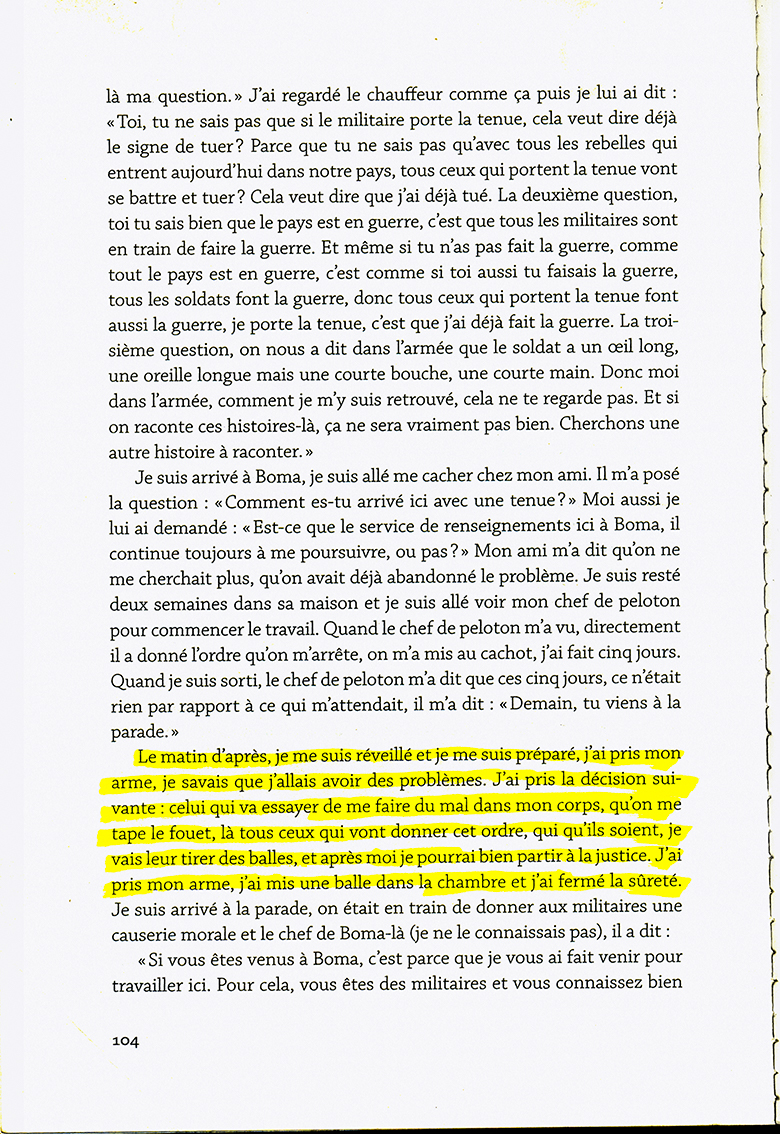
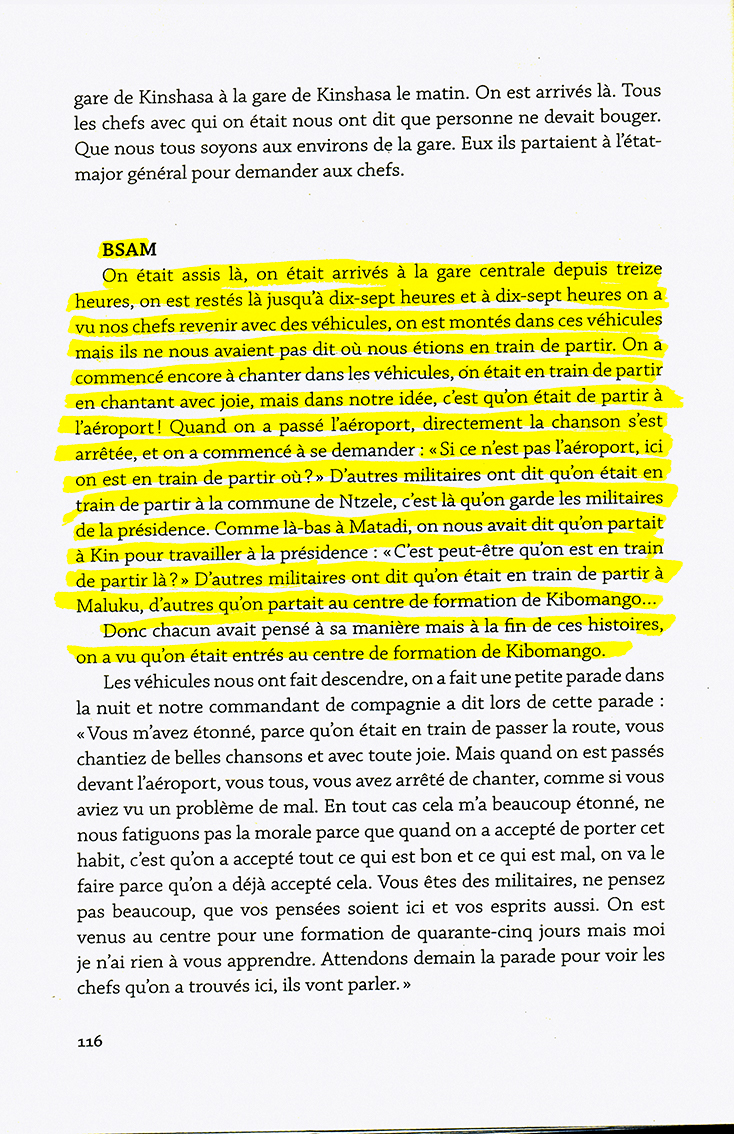
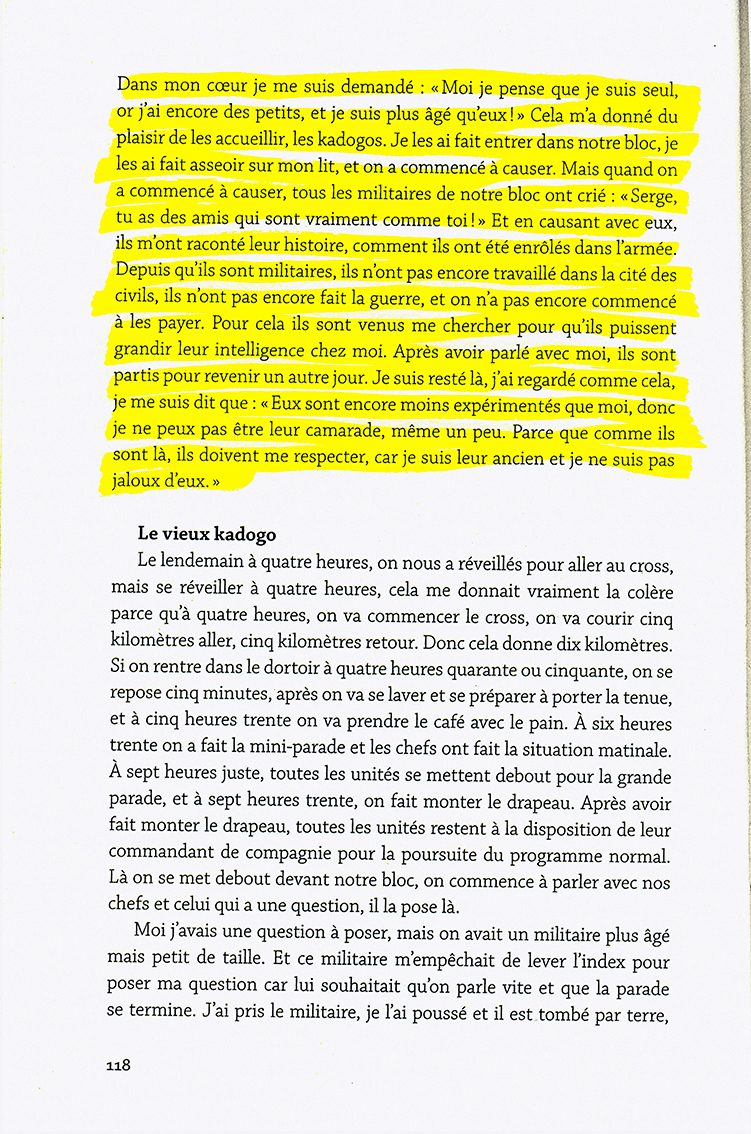
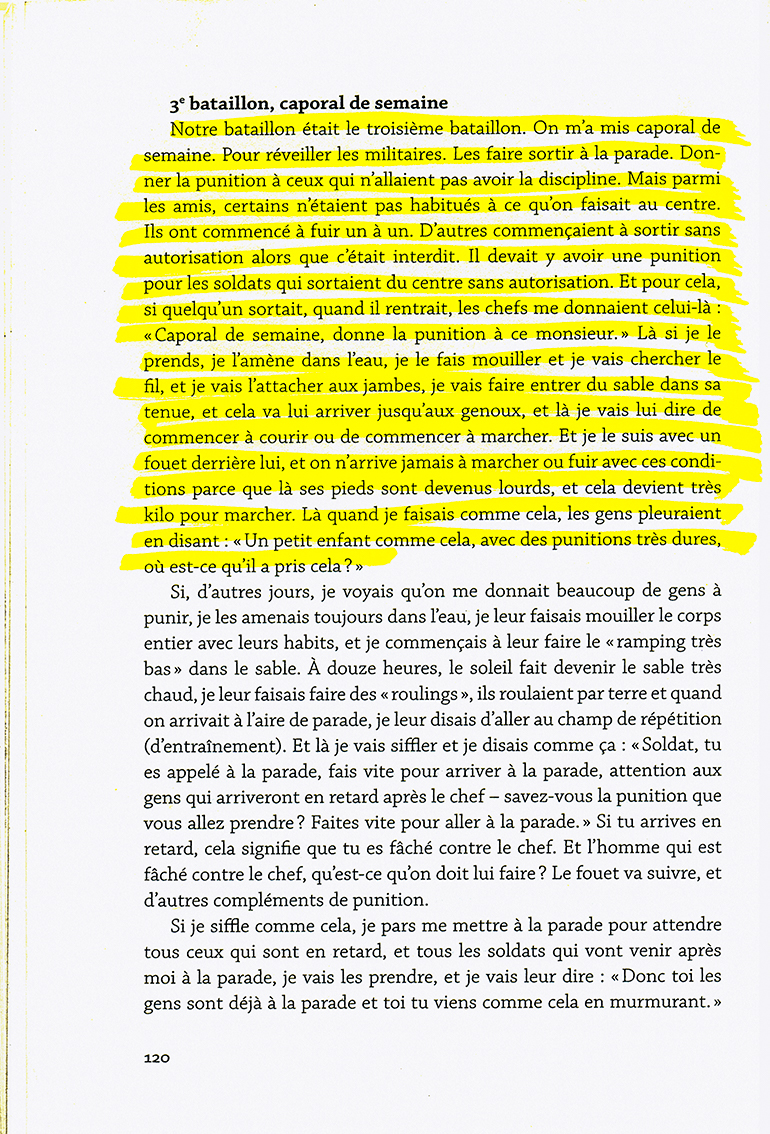
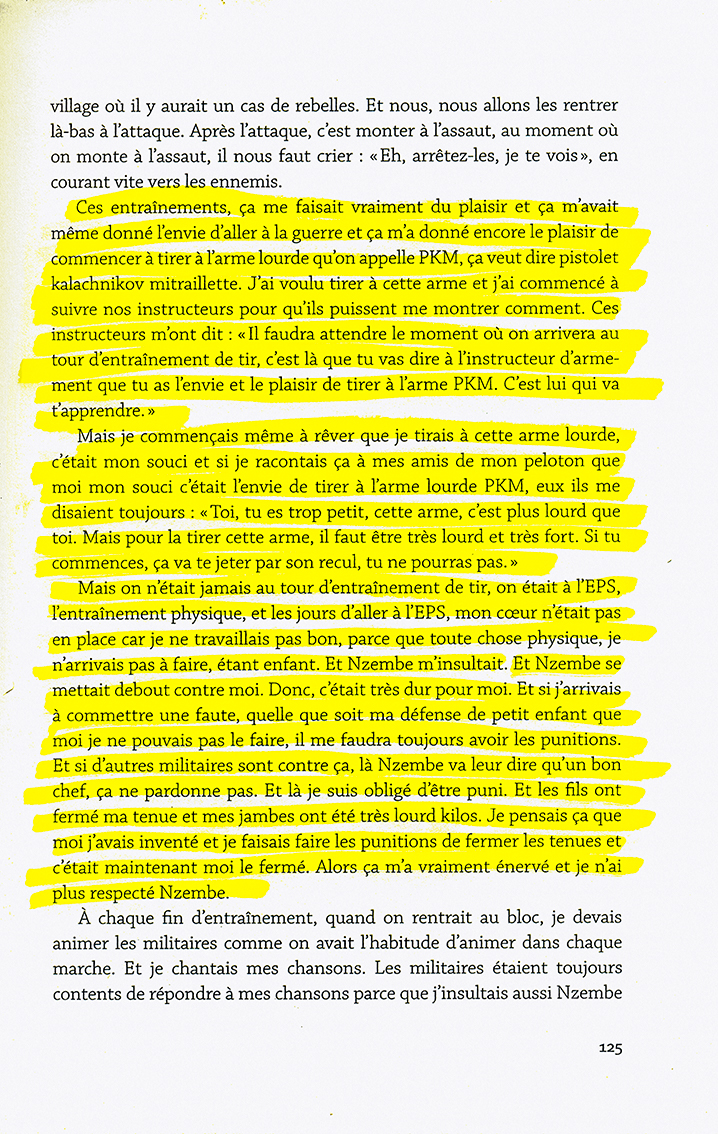
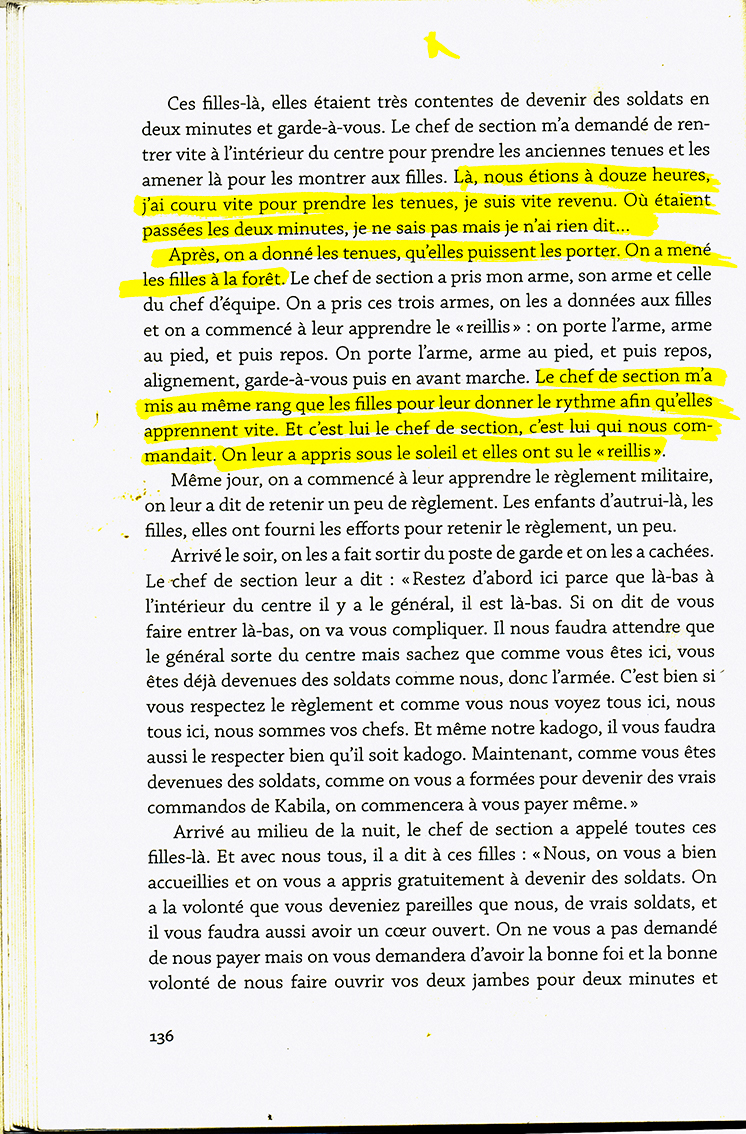
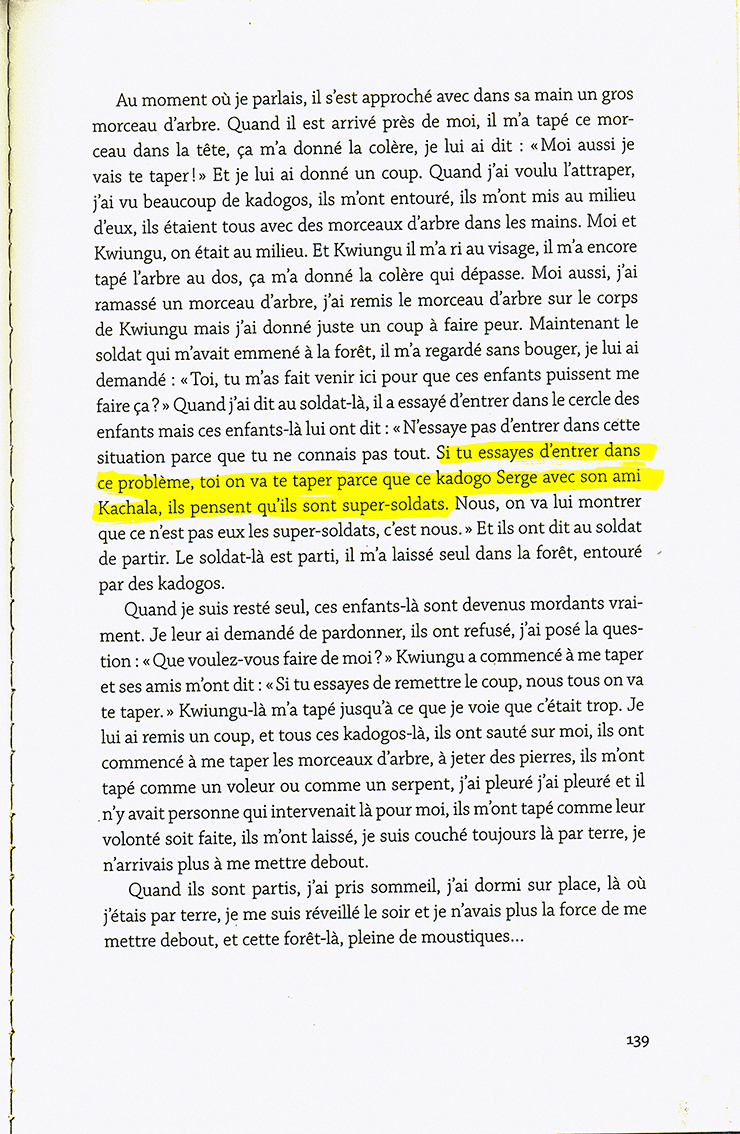
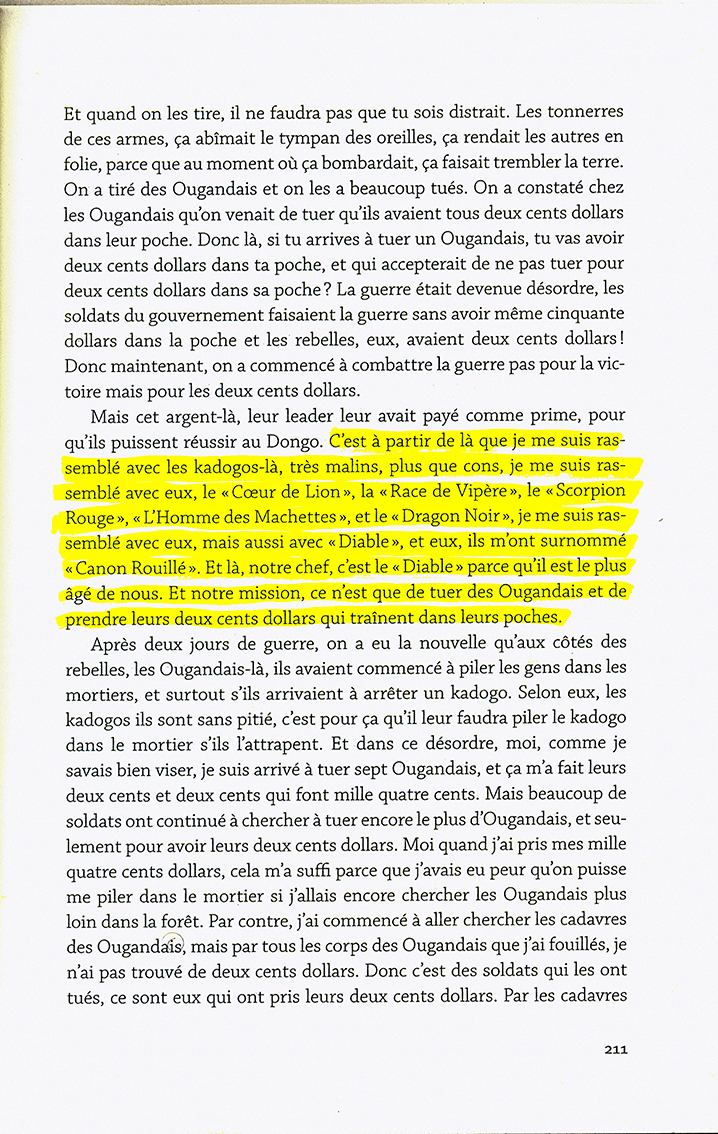
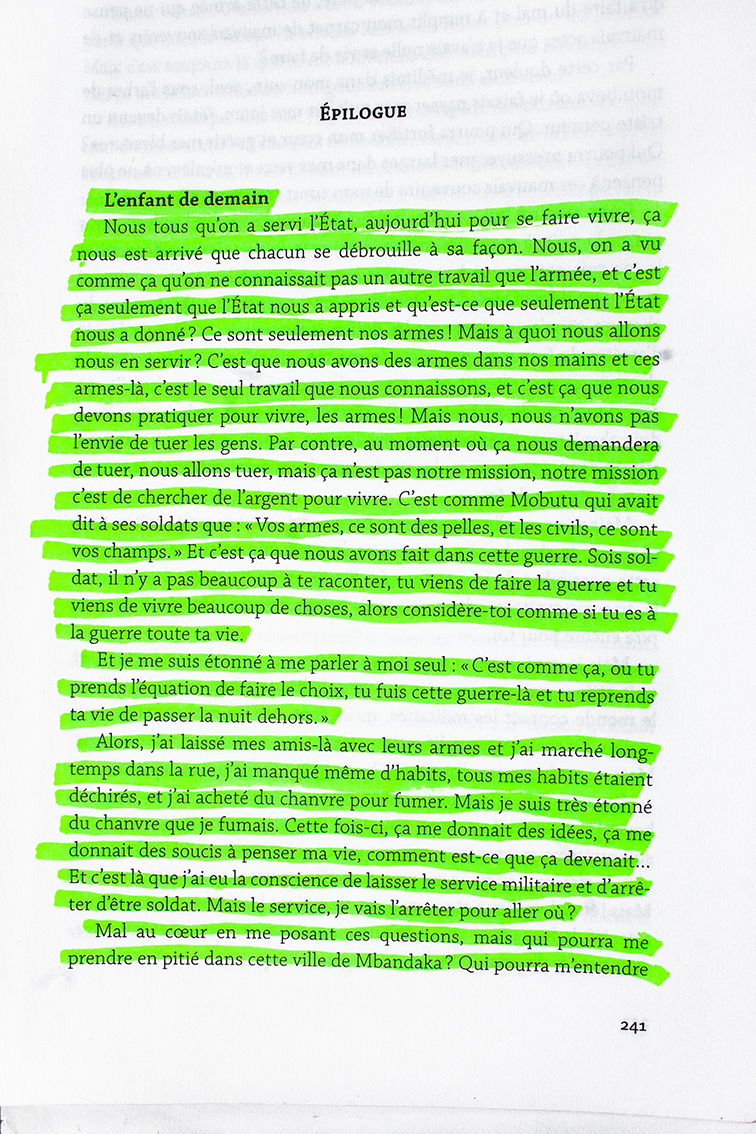
Their story is an illusion because in their new identities, they cannot imagine child soldiers but adult soldiers, and they led me to have a vision of the reality that I and other children experienced in 1997 with real child soldiers. The portraits of these children began to scroll through my head and remind me of the true stories of a child soldier named Serge Amisi, who was recruited by force. Disenfranchised, he decided to tell his own story so that he could be remembered. In the confrontation of the portraits of child soldiers and the true story of a child soldier, I want to support his written testimony by choosing some paragraphs from the book and visual evidence of what I experienced in 1997 to show them in a fictional diptych. It is a reality that still happens today in the Congo and raises the question: what does it mean for the future Congolese to take a child?
Diptychs
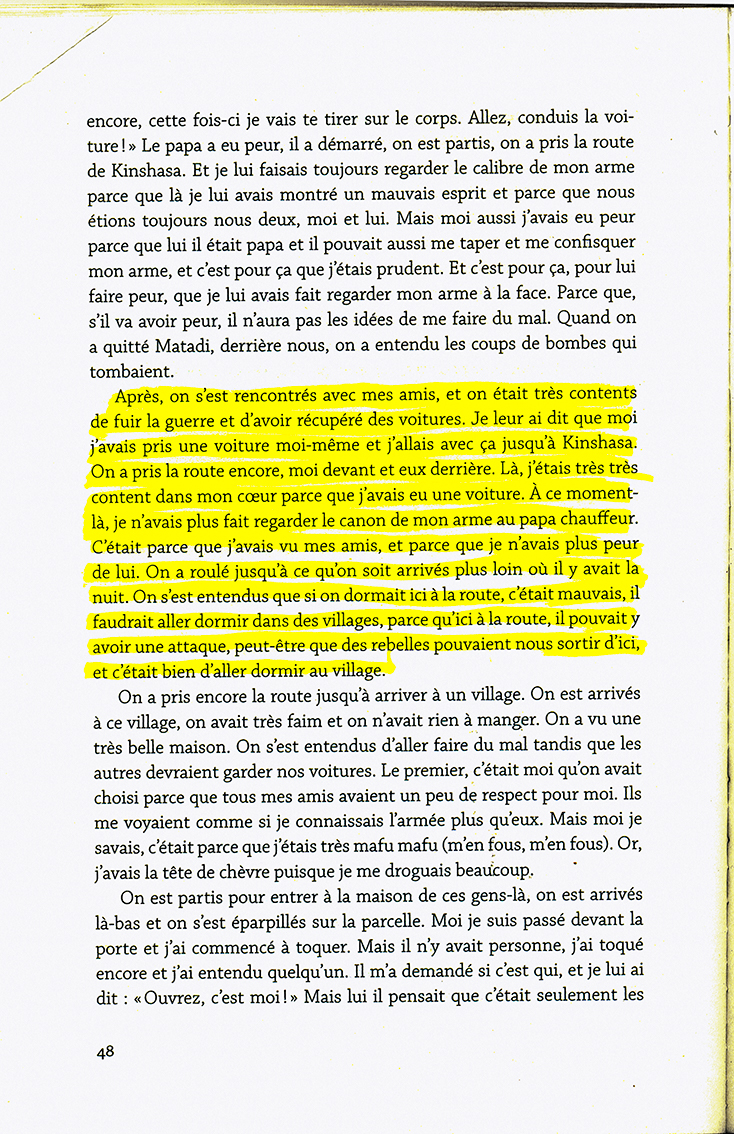
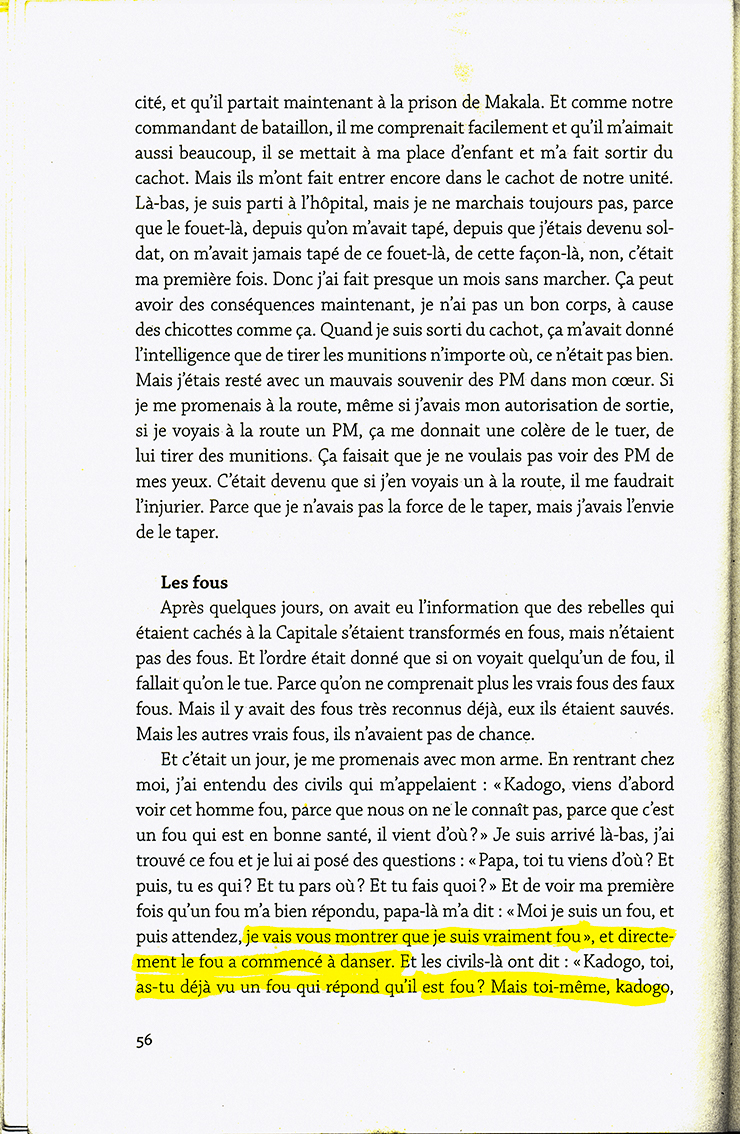
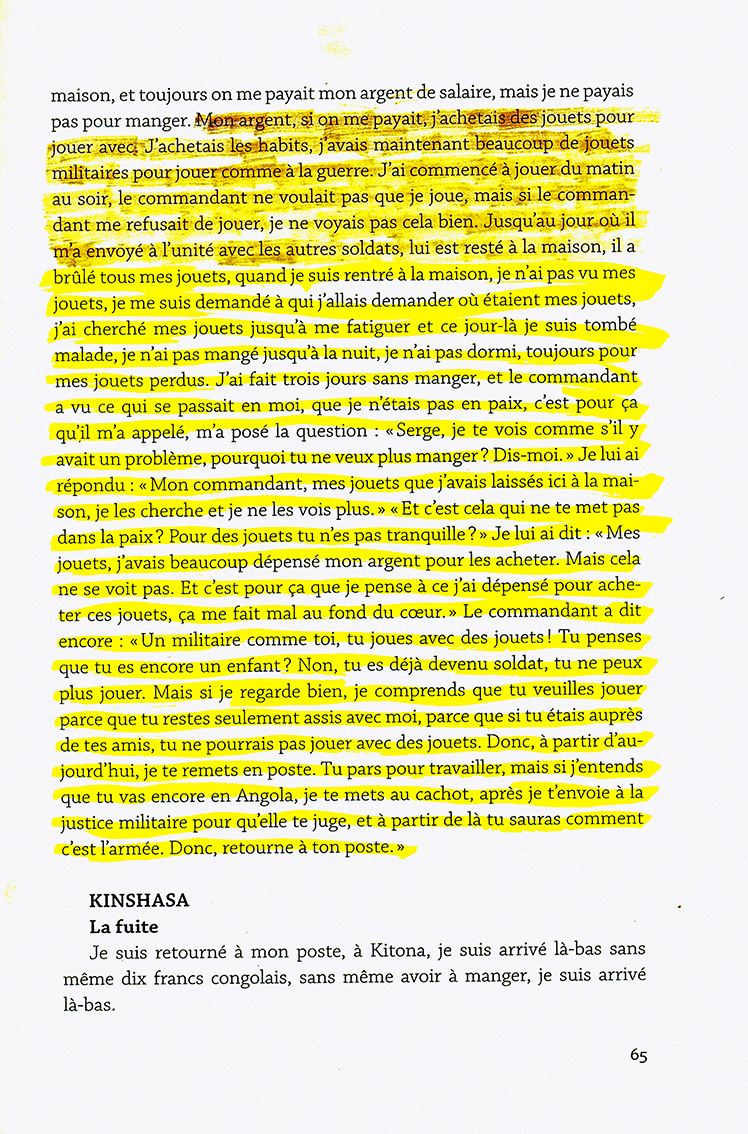
Exhibition Views
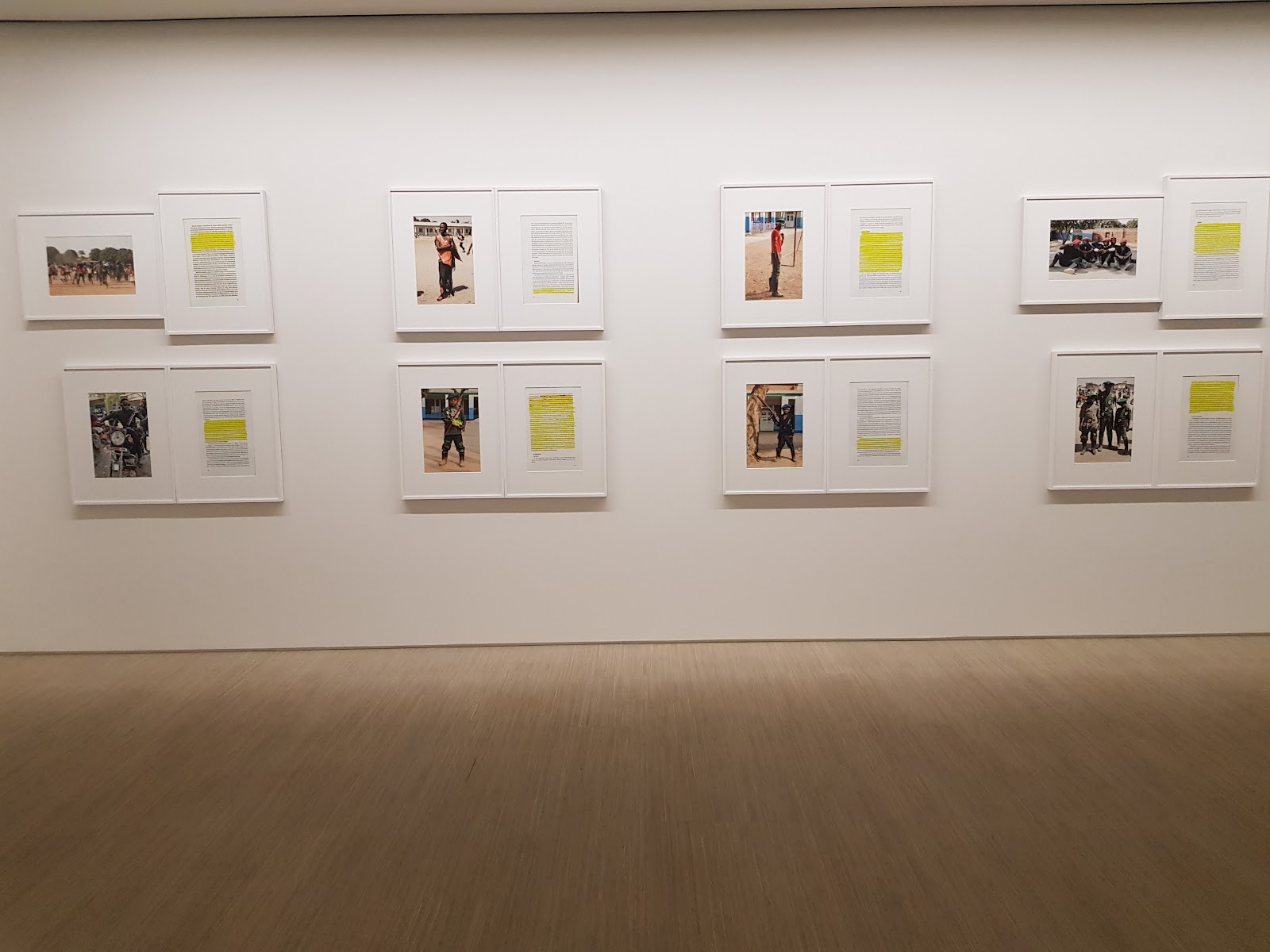


Context: "Kadogo" means "child soldier" in Swahili. The project combines portraits of children playing war games with the testimony of Serge Amisi, a former child soldier from the AFDL (Alliance of Democratic Forces for the Liberation of Congo) during the war that overthrew Mobutu in 1997. The work raises the question: what does it mean for the future of Congo to take a child?